04 - The Military and The Circus
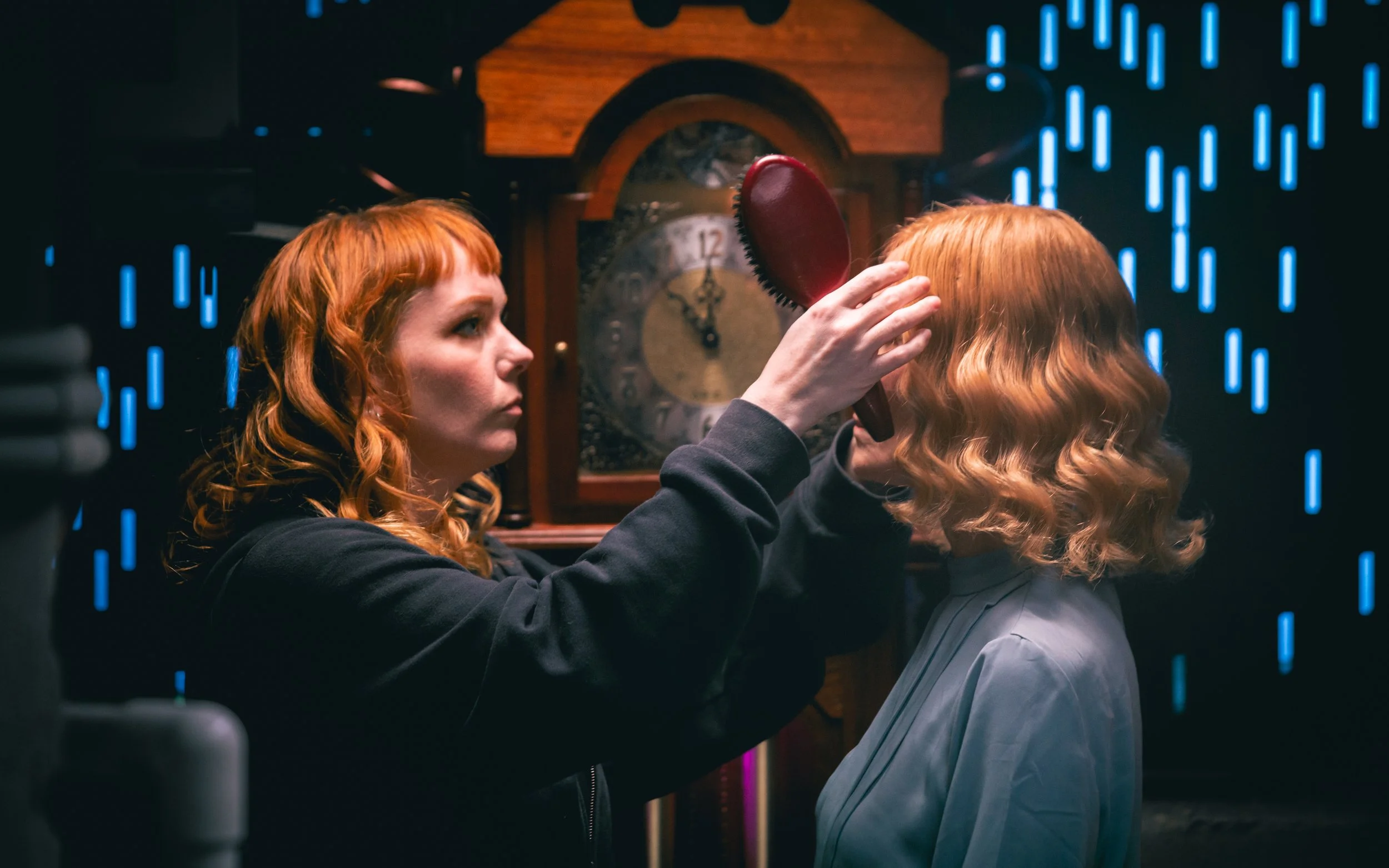
Photo by Dan Berghofer
I’ve spent about fifteen years on film sets, absolutely loving my work. I am not built for a desk job, a 9-5 where I can predict what will happen each day, I want the ups and downs of a literal rollercoaster, where one day you’re slowly climbing a hill, crossing things off your to dos, before suddenly you’re racing through surprise twists and turns, curveballs, explosions, trying desperately to hold on.
Hair, makeup and prosthetics was my calling card to the industry, a department where my art skills found a place amongst that rollercoaster. Film sets, in case nobody’s told you, are chaotic by design, but in HMU it’s a department that at least has some sort of a linear career ladder. Assist, artist, key, department head, there’s usually an easy category that describes you and what your responsibilities are on any given set.
Producing has no ladder. Producing is more someone saying ‘see that building on fire? We hear you’re good under pressure, here are the keys’.
I’ve heard this line said before (and used it many times myself), that the film industry is a bit like a mix of the circus and the military. Totally unhinged creatives with wildly ambitious goals, running on twenty four hour time, with everything scheduled down to the minute. On any given set you might find one person 20 metres in the air rigging lights, one person rehearsing a dangerous stunt, one person tearing their hair out over a spreadsheet, one person silently crying into their coffee, and always at least four people running. As a producer, I have to know what all of those people are doing, and which one is the most important task to prioritise, minute to minute. Top tip – unless something is actively on fire, check on the crying person first.
Photo by Dan Berghofer
When Enzo first called me about producing Resonance, at that point I’d only produced two short films. That was it, I had zero experience with lengthy complex contracts, I didn’t know what ‘audit ready’ meant for a Producer Offset claim, no real experience in post production workflows, or marketing strategies, distribution… you get my point. At the same time I had a Makeup Designer role on a feature that I was being offered across those dates, and funnily enough the rate on the crew position was going to be higher, and actually paid for all of the days I worked. The producer role was a fee that lightly covered my bills through pre and shoot, but being a producer means that all the responsibility is on you to finish the film whether you’re getting a weekly pay cheque or not. So here we are, two years from when we called wrap and I think that must mean I was getting a couple of dollars an hour?
This was the biggest dilemma that I considered when I was making this choice. I knew, not from experience but just from what others had told me, that producing involves an enormous amount of time, energy and effort poured into something and often for long stretches of time without any fees. High risk obviously, but potentially high reward. So in that moment, I thought less about the project fees, and more ‘what’s the next credit I want? What’s my next career step?’
Resonance it was.
We had ten weeks from Enzo opening a blank document in Final Draft to wrapping a three week shoot in a house with a limited window of access. That's not a schedule, it's basically a dare. A lot of what I actually did in that window wasn't the part anyone puts on a poster, it was building a plan on the assumption that at least one thing would go wrong every single day, and then being right about that more often than I'd like to admit. Cash flow, favours, insurance, panic, catering, contracts, WHERE’S THE CASH, panic, that's the job. Every problem we encountered on this film got solved by improvising something on the spot, because what I was running on was gut instincts, not experience.
There's a type of producer who turns up on set around catering time, has a lovely chat with the cast, pats a PA on the head, and couldn't pick the boom op out of a lineup. I spent fifteen years being below-the-line, painting faces with the makeup team, the ones often forgotten in the thanks, doing a job that only gets noticed when it goes wrong, at 4am, in a car park, freezing. Above all else, I think understanding the people on set has been the most helpful transferable skill for my transition into producing. The crew, the designers, the creatives, the technical craftspeople who create what you see on the screen. It’s not about fancy crafty, pretty trailers, the nice biscuits (if you know you know), what’s important is someone working just as hard as they are, standing right next to them in the mud, in the rain, at the same ungodly hour.
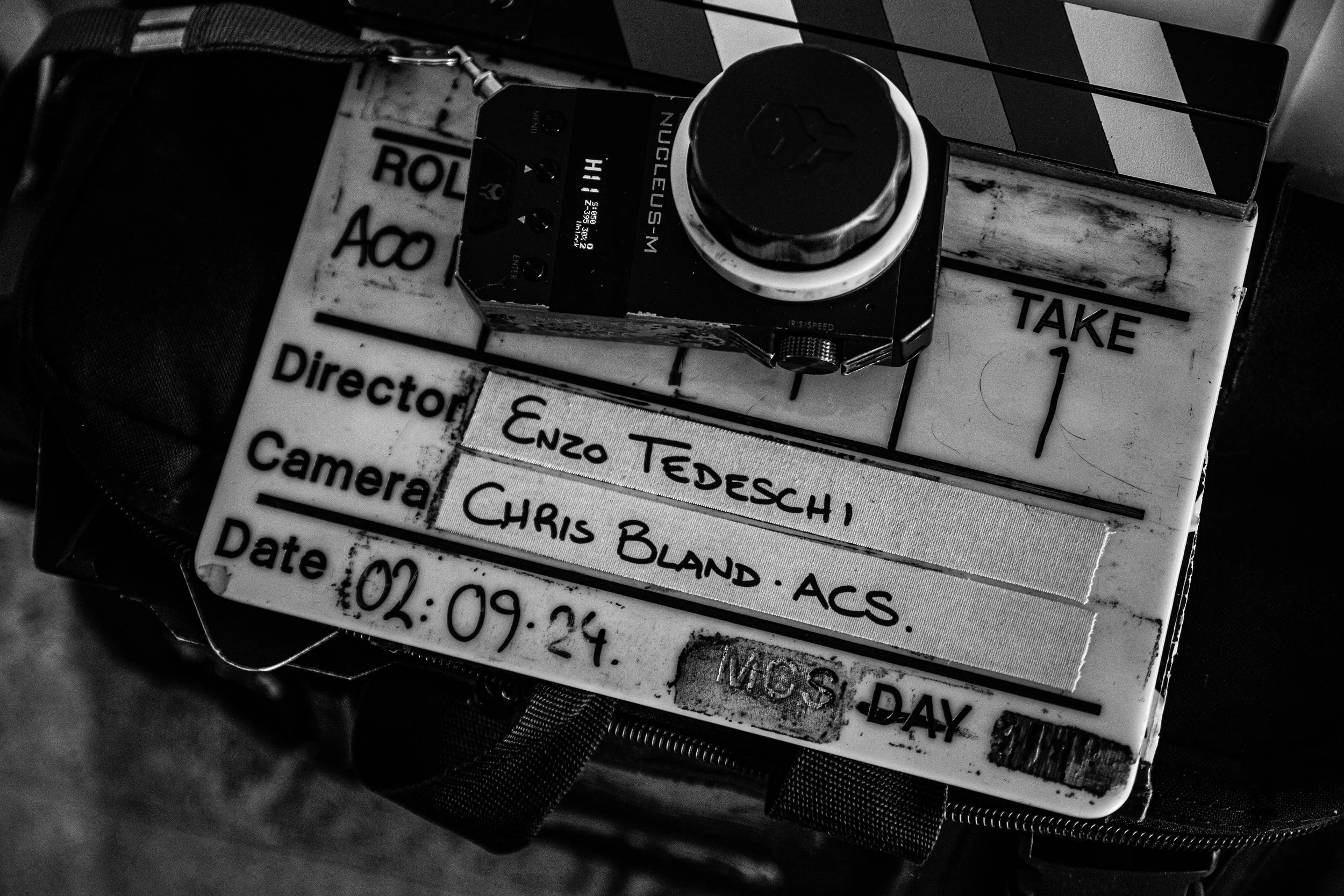
Photo by Dan Berghofer
So on Resonance, with no feature experience and a checklist of things I'd never technically done before, the only plan I had was to be in it. Not managing from a laptop at a safe distance, but mucking in. Loading gear, running food, taking phone calls at midnight, and being awake for the same hours as everyone else. Turns out that's most of what the job actually is!
I was mid swing on two other feature films while Resonance quietly finished its visual effects in the background. It Will Find You asked more of me than Resonance did. Crashout has asked considerably more again. Each production became a louder version of the same lesson, that producing is just problem solving at speed, so the only way forward is to work out which problems are actually urgent, and which only feel that way when you’re wide awake at 3am. This, I think, is the key to not going insane. Have I actually learned that lesson? Not at all.
Helen Tuck