

06: Meeting Your Younger Self

Enzo: I remember the first time Ryan showed us a fully de-aged Barbara Bingham as Amelia. What was going through your mind?
Barbara: Silence. Not excitement, or "Wow, that's clever." It was much more emotional than that.
For a moment, I wasn't looking at visual effects. I was looking at a woman I hadn't seen in over thirty years. She looked familiar, but she also felt like someone I'd spent a lifetime becoming. I recognised her instantly, yet I realised how much life she'd still had ahead of her. She didn't know about the joys, the losses, the mistakes, the resilience. She hadn't lived any of it yet. That's what caught me off guard.
Enzo: Did it change the way you thought about Amelia?
Barbara: Completely.
Up until then, Amelia had been a character I was creating. But seeing that younger face looking back at me made her feel strangely real. Suddenly I wasn't imagining Clara's great-grandmother anymore. I was looking at someone who genuinely could have existed before Clara.
It stopped feeling like a performance and started feeling like a memory.
Enzo: People often assume de-ageing is about making someone look younger.
Barbara: That's the least interesting part of it. Looking younger is cosmetic. Looking like the person you once were is something else entirely.
The technology doesn't create the emotion—it simply gives you permission to believe it. Once I saw Amelia, I understood why we'd gone to all this trouble. The audience isn't meant to admire the visual effects. They're meant to forget they exist.
Enzo: That's always been the point. The film isn't about technology. It's about time. About who we were, who we've become, and whether those two people would recognise each other if they ever met. The de-ageing isn't just a gimmick. It's simply the only honest way to tell that story.
Barbara: And that's what surprised me most. Meeting my younger self wasn't nostalgic. I didn’t find myself wishing I was thirty again. It was about gratitude. That younger woman had no idea where life would take her. I wanted to reach through the screen and tell her she'd be okay.
I think that's why the final meeting between Clara and Amelia means so much to me. They're not really two women separated by a century. They're every version of ourselves we've ever been. If Resonance invites audiences to ask themselves who they used to be and whether that younger person would recognise who they've become, then we've told exactly the story we hoped to tell.
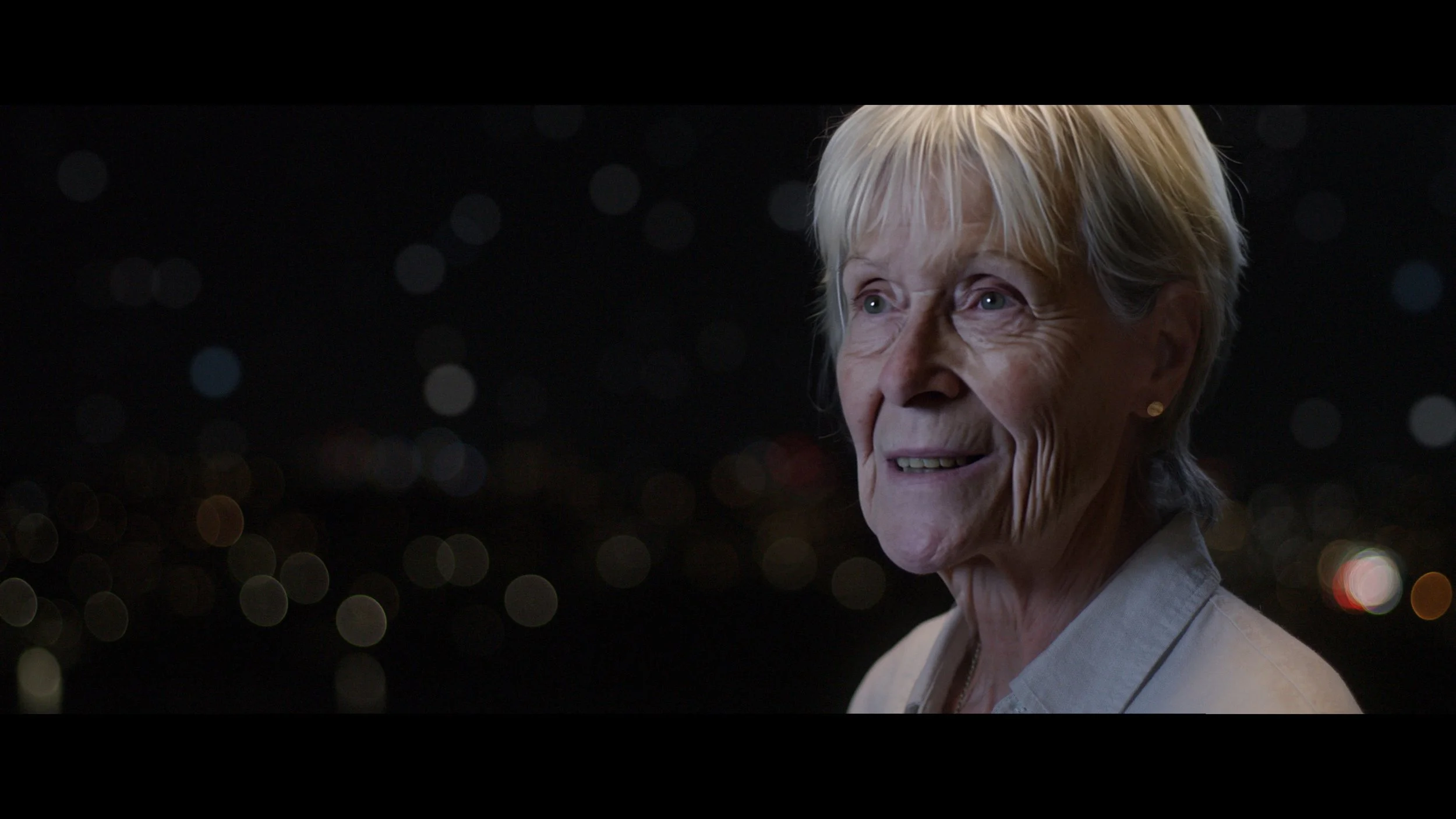
Enzo: Everyone asks about seeing yourself thirty years younger. But what about seeing yourself thirty years older?
Barbara: That affected me just as much, if not more. Seeing myself de-aged was like meeting someone I remembered. Seeing myself aged into my eighties or nineties was like greeting someone I haven't met yet. There was something strangely comforting about her. She wasn't fragile or diminished. She still had curiosity in her eyes. She still had strength. She simply carried more life on her face. Every wrinkle felt earned.
I found myself thinking, "If that's where I'm heading, I'm okay with that." It wasn't confronting. It was reassuring.
Enzo: That's interesting because the film lives in both directions. It asks us to look backwards and forwards at the same time.
Barbara: Exactly. Most of us spend our lives either romanticising our youth or fearing old age. Resonance gave me the chance to do both in the space of a single film. Meeting my younger self filled me with compassion for the woman who had no idea what lay ahead. Meeting my older self, filled me with compassion for the woman I'm still becoming. Somewhere between those two women is the person I am today.
That's really what the film is about. Time doesn't separate us from the people we were or the people we'll become. It connects us.